
Issue 0001 – 3 June 2026
Hey, hey fellow aftermarketer!
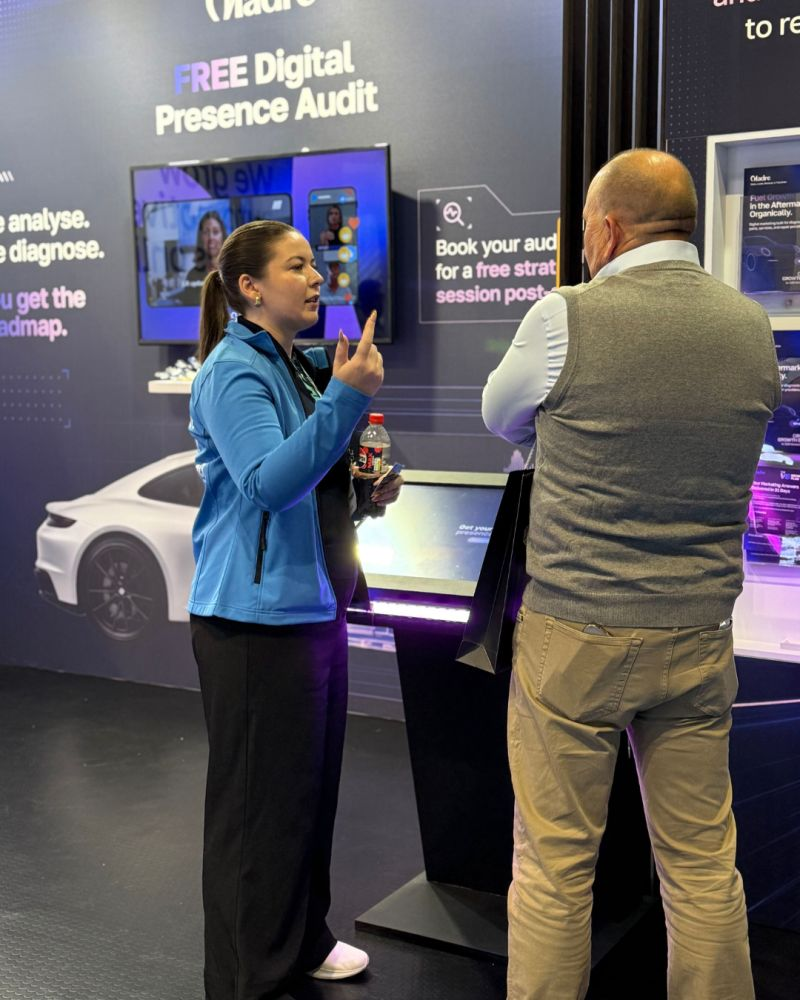
First off, I am absolutely chuffed that you have trusted me with your time and eyeballs on this Wednesday morning, whilst the UK Garage and Bodyshop Event is on, no less.
I want to thank you for that trust and for subscribing to the first-ever issue of the “Aftermarketing” newsletter.
Here’s how each issue will go:
I’ll run through the headline news of what’s going on in social, search, and digital marketing, translate it into context that hopefully makes sense, and then give you some homework to try.
Let’s look at what’s been going on.
So, you may have seen from Google’s latest I/O conference that they are changing how we search.
Previously, for the last 25+ years, Google was a page of blue links. You would search, get that list of blue links, click into one and land on a website. I’m pretty sure we’re all familiar with the setup.
Now, though, Google has officially overhauled search and is going all in on AI, pushing the old list of links down the page and putting an AI-written answer at the top.
They call it an AI Overview and I’m sure you’ve been seeing it more and more lately.
It basically reads the web and writes you a paragraph on the spot, so you never need to click anything.
That might sound great if you’re the one searching, but not so great if you run a company website, because if AI is answering the question, nobody is clicking through anymore.
When asked about this, Google’s Sundar Pichai essentially waved it off and said if you make good content that people like, Google will keep putting you in front of them, just in the AI citations, which is definitely not the same as a website you can control.
In contrast, in the same interview, a senior figure at Condé Nast, one of the biggest publishers out there, said his teams now plan as if that Google traffic vanishes completely.
Think about that for a second.
For over 25+ years, we have invested in SEO, PPC and other ways to get Google to put us at the top of the list of blue links. So many businesses, including our clients, have built their whole model around it. Now, some of the biggest publishers on the internet are gearing up to never expect website traffic from Google.
That is a huge shift that we need to take very seriously.
The sharpest take came from Rand Fishkin, looking at fresh research from MIT. His conclusion is something we’ve been pushing since we started Madre: influence is the new traffic.
The old approach of writing good content and waiting for Google to send strangers is running out of road. The new game is being known and trusted, with an audience you’ve built somewhere of your own or in the places your buyers already gather.
So this means you can’t just build up content using generic AI posts or articles. It won’t be good enough for Google to push, and it certainly won’t be good enough to build brand and influence, since AI just writes the most probable take.
You need to write from your own experience and expertise.
Tip: Google “EEAT” to find out more about the SEO approach here.
And speaking of AI content, the platforms are taking a stance on the sheer amount of AI slop too.
LinkedIn is going to show less of any post that looks AI-generated and has no real point of view. They say that it’s fine to use AI to help you write, but the post has to carry your own voice, because the value is the human behind it.
Over on YouTube, it now auto-detects AI-made video and labels it for viewers.
So the boring basics still win.
Answer the questions your customers actually ask, show you know this trade better than someone working it out from the outside, and post a high quantity of quality content that proves it.
The other thing we’ve been seeing more of is social media being used as a citation source in AI Overviews, including platforms like Instagram, LinkedIn and YouTube.
For me, that is one of the biggest and coolest things we’ve found recently, because it makes your social content even more important.
It’s not just about posting for likes anymore.
Your posts, captions, videos and answers are all part of the footprint AI can use to understand who you are, what you do, and whether you’re worth mentioning.
So make sure you’re creating social content that actually answers your customers’ questions, not just posting for the sake of filling a calendar.
A quick note on control of the feed
Google has also added a feature called “preferred sources”.
It lets a Google user pick the websites they want to see more of, so those sites get bumped up in that person’s results, and now in the AI answers too.
That sounds pretty scary for brands that aren’t strong, however, if you’re posting content, here’s a quick tip I think you should jump on.
Just ask your own customers to add you. It takes them a few seconds.
So a quick line in your next email, “tap here to see more of us in your Google results”, and you start turning up more often for the people who already buy from you.
YouTube is moving in a similar direction too.
You can now describe the kind of feed you want in plain words and it’ll build it for you.
If you’re noticing a theme, that’s because there is one.
Users are going to have more control over what AI feeds them, what sources they prefer, and what content gets surfaced.
High-quality content that builds influence, trust and brand, and answers your ideal customers’ questions, is essential if you want to be chosen as part of their feed.
The one thing to take away
The web is moving from clicks to trust.
The businesses that win the next couple of years are the ones people, and AI, already trust enough to name without thinking.
Everything above is a way of getting there.
Your homework: one simple audit this week
Pick one product, service, or offer you want more people to find. Then search for it in three ways:
- “Best [your product/service] for [your customer]”
- “How to choose [your product/service]”
- “[Your product/service] vs [main alternative]”
Look at what Google’s AI Overview says. Who does it name? What sources does it cite? What questions does it answer? What is missing?
Then do the same inside ChatGPT, Claude or Perplexity. Ask the question the way your customer would ask it, and see whether your business appears, whether your competitors appear, and what the AI seems to trust.
If the AI is answering a buying question and you’re nowhere to be seen, create one useful piece of content that answers that exact question properly.
YouTube is a really good way to get citations, but it could also be a LinkedIn post, a short video, an Instagram post, a blog, or an email to your customers.
Influence is the new way we get eyeballs, so start by becoming the source worth naming.
– Sara-Mai ✌️
PS. I hope you enjoyed this first issue! Are there any platforms you’d like me to go deeper into next week?
PPS. If you’re at the UK Garage and Bodyshop Event, Ciri-Ann and I will be walking the halls, so please come and say hi!